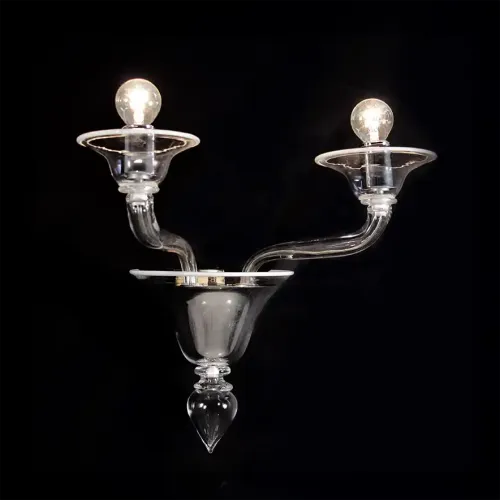
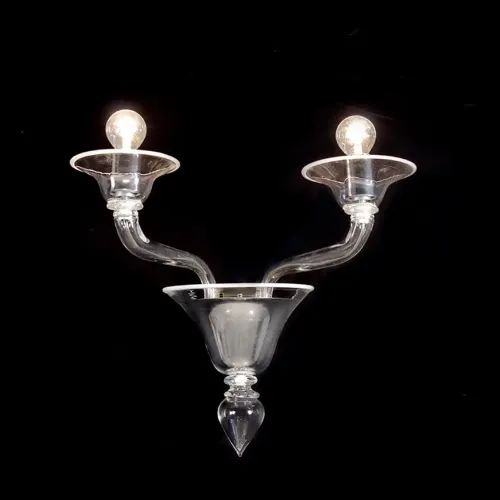
Description
Wall sconce handcrafted by Murano masters, rediscovering the history of Venetian glass art traditions with the precision and attention to detail that sets us apart.
Every step of the workmanship is handcrafted, and the chandelier ordered will be made expressly for your home.
Comes with Belvetro Murano Certificate of Guarantee and Authenticity.
Each chandelier is shipped with included replacement parts and assembly instructions for quick and easy assembly.
Delivery is in 30-40 days by 100% insured express courier.
Would you like more information? Don’t hesitate to contact us, we will be happy to help you choose your Murano chandelier, a value that lasts.
ZARA
Founded in the 9th century B.C. by the Liburni, an Illyrian tribe, it became first a Roman municipium under the name Iadera and then a Roman colony probably as early as under Caesar. After the fall of the Western Roman Empire and the destruction of Salona, in the early 7th century Zadar became the capital of the Byzantine province of Dalmatia, later the Duchy of Dalmatia. Byzantine control was contested until the 10th century by the Goths, Franks, and later by the Croats.
For centuries Zadar was one of the most important cities of the Venetian Republic, of which it was a part from theyear 1000 until its fall in 1797. After a brief Napoleonic interlude it was ruled by the Austrians until the early 1900s, becoming the capital of the Kingdom of Dalmatia. Following World War I, the city became an Italianexclave, capital of the province of Zadar, surrounded by Yugoslav Dalmatia.
During World War II it was severely affected by aerial bombardment and, following the 1947 peace treaty, was officially annexed to Yugoslavia. Since 1991, when the Yugoslav republic dissolved, it has been part of Croatia and is now the capital of the Zadar region, a university and archbishopric.
Zadar, until the dissolution of Yugoslavia was one of the most economically developed cities on the Dalmatian coast, a supremacy it still holds, given the presence of factories from a variety of industrial branches. This versatility allowed Zadar to recover relatively quickly after the Croatian War of Independence. The port of Zadar, which is used for both tourist and cargo traffic, has become one of the busiest ports in Croatia with a steady growth trend since it offers a direct connection betweenItaly, Croatia and the rest ofCentral Europe.
Until 1947, the Italian-speaking and Italian-cultured component constituted the majority of the population, but most of it abandoned the city as a result of Allied bombing during World War II and later ethnic and political persecution. Today only a small Italian-speaking minority of Dalmatians survives in the city, gathered in the local Community of Italians.