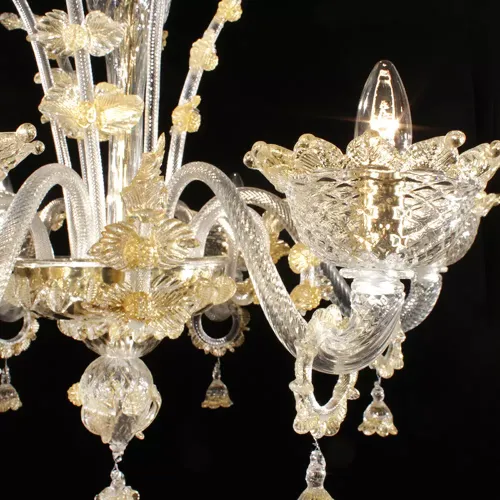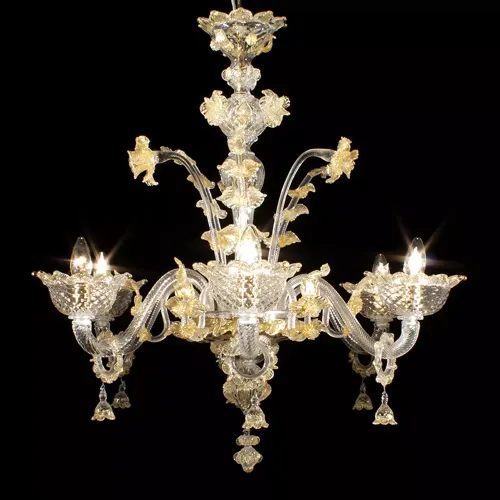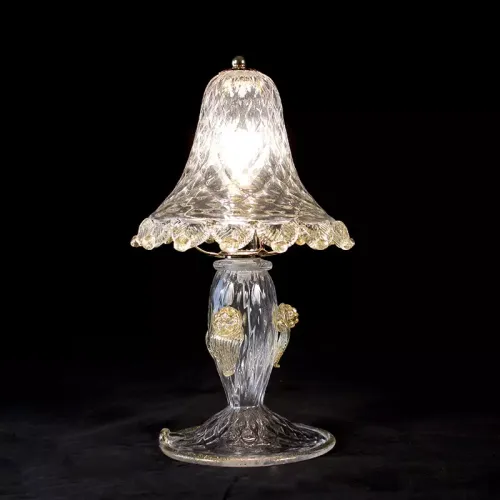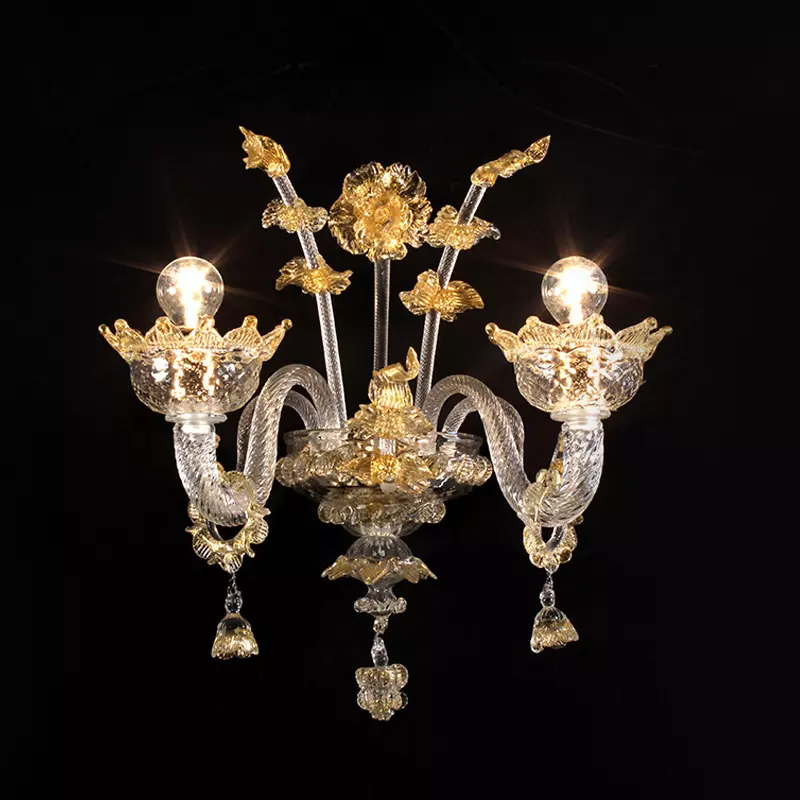
Recalls of nature, colors of flowers and leaves that give off the warmth of light and hearth.
Mercerie model made of clear crystal glass with twisted rigadin and baloton processing, decorations are crystal and 24k gold, 24k gold-plated metal parts.

Recalls of nature, colors of flowers and leaves that give off the warmth of light and hearth.
Mercerie model made of clear crystal glass with twisted rigadin and baloton processing, decorations are crystal and 24k gold, 24k gold-plated metal parts.
Every step of the workmanship is handcrafted, and the wall sconce you order will be made expressly for your home.
Comes with Belvetro Murano Certificate of Guarantee and Authenticity.
Each wall sconce is shipped with included replacement parts and assembly instructions for quick and easy assembly.
Delivery is in 30-40 days by 100% insured express courier.
Would you like more information? Don’t hesitate to contact us, we will be happy to help you choose your Murano object, a value that lasts.
are the main commercial artery of the city of Venice. They are located in the sestiere of San Marco and connect St. Mark’s Square to the Rialto area through a system of calli.
The Mercerie have been the core of the lagoon city’s commercial activity since the very early days of the Venetian Republic when precious goods arrived in port from distant markets were sold there. In the old days, stores selling fine cloth and fabrics stayed open all night. Along the entire route of the Mercerie and the immediate surroundings, the ground floor of all buildings on both sides is occupied almost exclusively by stores, which thus follow one another continuously.
Currently, the Mercerie is home to opulent and representative stores: jewelry stores, leather goods, shoe and clothing stores, and artistic glassworks with Murano production abound.
At the beginning of the Clockwork Mercerie, a small bas-relief depicting a woman dropping a pestle can be seen at the second floor level. The image recalls the incident related to the failure of the revolt led by Bajamonte Tiepolo in the 14th century.
The rioters were on their way to St. Mark’s Square to storm the Doge’s Palace when a woman watching the scene from the window of her home slipped out of her hand the stone pestle she was working with. The implement struck the riot leader in the head, killing him on the spot and thus bringing the riot to an end. The Lordship of the Republic then decreed perpetual exemption from paying rent for the woman, as a sign of thanks for the narrow escape from danger.
| Numero Luci | 1, 2 |
|---|---|
| Stile | Classic |